Between Seasons: What the Wardrobe Pause Quietly Tells You
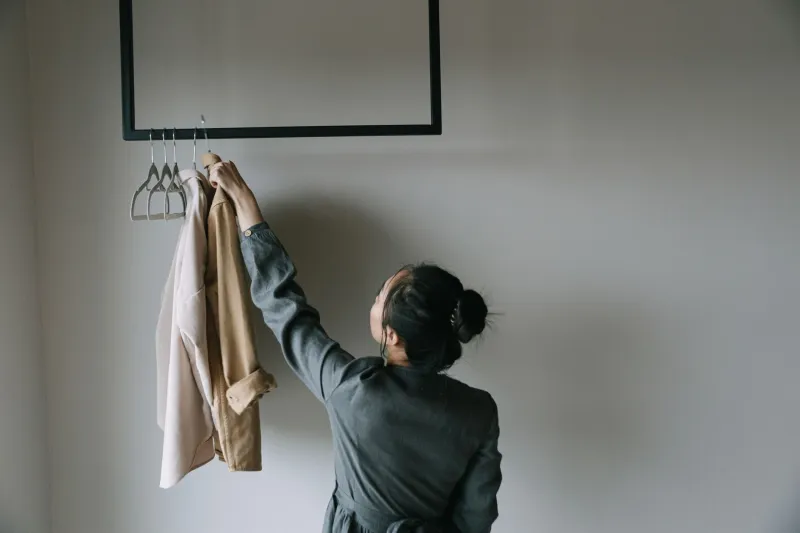
There is a particular kind of morning that arrives in early October and again in late March—a morning when the air has shifted just enough to make yesterday's outfit feel wrong, but not quite enough to justify pulling out an entirely new wardrobe. You stand at your closet, and for a brief, unguarded moment, you see it clearly: what you actually reach for, what you perpetually skip, and what has been quietly taking up real estate without ever truly serving you.
This is the seasonal pause. And if you have been treating it merely as an inconvenience—a logistical hurdle between summer linen and fall cashmere—you have been overlooking one of the most revealing moments in a woman's relationship with her wardrobe.
The Moment of Unfiltered Honesty
Seasonal transitions strip away the autopilot. During the height of any given season, dressing becomes almost habitual. You know what works, you reach for the same reliable pieces, and the closet operates on a kind of muscle memory. But when the temperature shifts and those trusted standbys no longer quite apply, you are forced to look at everything else.
What remains when the obvious choices are temporarily off the table? That question, asked sincerely, is extraordinarily instructive. The pieces you naturally gravitate toward during these in-between weeks—the lightweight wool blazer, the silk blouse that works with almost anything, the tailored trouser that seems to belong to every month of the year—those are your anchors. They are telling you something important about the kind of style you actually live, as opposed to the style you imagine for yourself when shopping.
Conversely, the pieces you overlook during this transitional window, despite their technical availability, are equally telling. If a garment cannot find its moment during the most flexible dressing period of the year, it is reasonable to ask whether it belongs in your life at all.
Auditing With Intention, Not Anxiety
The conventional seasonal closet clean-out tends to be driven by either guilt or enthusiasm—you are either purging out of frustration or reorganizing out of excitement for what is ahead. Neither state is particularly conducive to thoughtful evaluation.
A more considered approach begins before a single item is moved or removed. Spend a week simply observing. Notice which pieces you wear without deliberation and which require convincing yourself. Pay attention to the items you style in your mind but never quite put on your body. These mental rehearsals that never materialize are one of the clearest signals that a garment is aspirational rather than functional—beautiful in theory, but not genuinely aligned with how you move through your days.
Once you have observed, then audit. And audit with a specific framework: not merely do I love this? but has this piece earned its place? Earning a place means more than occasional use. It means contributing something distinct to your wardrobe's overall coherence—a specific weight, a particular silhouette, a color that bridges other pieces together. A wardrobe built on earned presence is one that functions with the quiet efficiency of a well-edited sentence.
The Transitional Piece as a Diagnostic Tool
If you want to understand what your wardrobe genuinely needs, look at how you dress during transitional weather. The pieces you layer, improvise with, and return to across those ambiguous weeks in spring and fall are a reliable diagnostic. They reveal the gaps that actually exist—not the gaps you perceive when scrolling through editorial images, but the real functional absences in your daily dressing life.
Perhaps you find yourself wishing, repeatedly, for a mid-weight coat that is neither a rain jacket nor a full wool overcoat. Perhaps you notice that your blouses work beautifully in summer but feel incomplete under the blazers you reach for in cooler months. These are legitimate discoveries. They point toward considered additions rather than impulse acquisitions—purchases made in response to observed need rather than momentary desire.
This distinction matters enormously in the context of building a wardrobe with genuine longevity. The most elegant closets are not the largest ones. They are the ones where nearly every item has a clear reason for being there, where the gaps are intentional and the overlaps are minimal.
Releasing What No Longer Serves
One of the more liberating realizations that seasonal transitions can prompt is the recognition that releasing a garment is not a failure. It does not mean you made a poor decision when you acquired it, nor does it mean you are wasteful or inconsistent. Wardrobes evolve because lives evolve. The woman you are dressing today is not identical to the woman who bought that wrap dress three years ago, and there is nothing to mourn in that fact.
When releasing pieces during a seasonal audit, resist the urge to justify keeping something because of its cost, its label, or the memory attached to it. Sentimental retention is one of the most common ways closets accumulate dead weight. Instead, ask whether the piece serves the life you are currently living—not the life you once lived, and not the life you hope to live, but the actual, present-tense reality of your days.
Donate thoughtfully. Consign where appropriate. Pass pieces along to someone who will genuinely use them. The act of releasing with care is itself a form of intentionality—one that aligns with the broader philosophy of curating rather than collecting.
Building a Wardrobe That Transcends the Calendar
The ultimate aspiration of the seasonal pause is not simply a tidier closet. It is a deeper understanding of your own style—the version of it that exists beneath trend cycles and seasonal marketing, the version that reflects how you actually want to move through the world.
When you engage with these transitional moments as opportunities rather than obligations, you begin to accumulate something more valuable than clothing: a clearer sense of your own aesthetic logic. You learn which silhouettes you return to instinctively, which fabrics feel most like yourself, and which purchases were driven by external influence rather than internal conviction.
Over time, this awareness produces a wardrobe that functions less like a collection of individual items and more like a coherent whole—one that dresses you with ease regardless of the season, because it has been built around the constants of who you are rather than the variables of what is currently available.
The pause between seasons is brief. But what it offers, to those willing to pay attention, is something that no new arrival can replicate: the quiet, clarifying truth of what you actually need.