Learning to Listen: The Subtle Language of Truly Well-Made Clothes
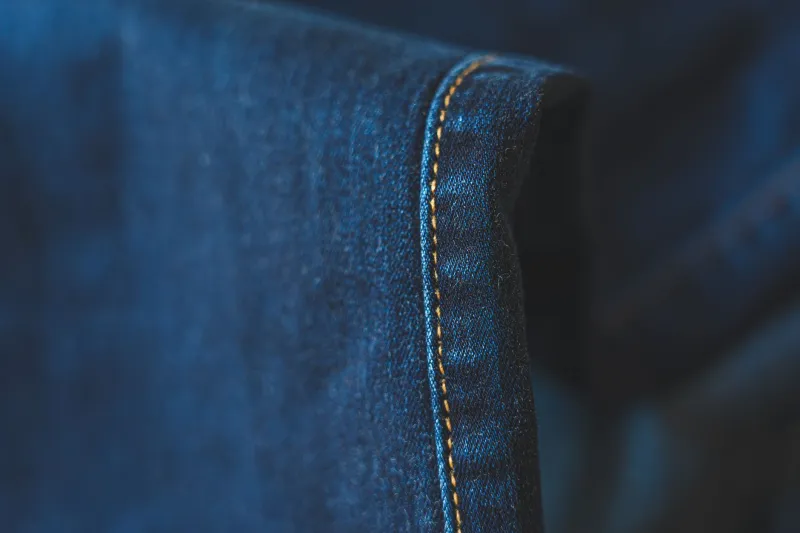
There is a particular kind of garment that does not compete for your attention. It does not rely on a logo embroidered across the chest, a statement print, or a silhouette engineered to provoke. Instead, it earns your admiration slowly — through the way it drapes when you move, the way it holds its shape after a hundred wearings, the way it feels against your skin on an ordinary Tuesday morning. This is the language of quality: understated, precise, and entirely its own.
For the discerning woman building a wardrobe of genuine intention, developing the ability to read this language is among the most valuable skills she can cultivate. It has nothing to do with price tags. It has everything to do with knowing where to look — and more importantly, knowing what you are looking for.
Begin With Your Hands, Not Your Eyes
Before you ever hold a garment up to the light or examine a seam, touch it. The hand — the way a fabric feels when held — communicates more about quality than almost any other single indicator. A well-constructed wool blazer will feel substantial without feeling stiff. A fine cotton shirt will feel cool and smooth, with a density that signals thread count rather than synthetic filler. A silk blouse of genuine quality will slip through your fingers with a fluid weight that synthetic alternatives simply cannot replicate.
Weight matters in particular. Quality fabrics tend to carry more of it. This is not a universal rule — fine linen can be beautifully light — but as a general principle, the considered use of weight in a garment's construction signals that a designer made deliberate choices rather than economizing wherever possible. Lift the hem of a dress. Hold the sleeve of a coat. If the fabric collapses limply or feels insubstantially thin, it is telling you something worth hearing.
Run the fabric between your thumb and forefinger and release it. Does it spring back to its original state, or does it remain creased? Recovery is a hallmark of quality fiber content and thoughtful construction. A garment that cannot hold its own shape in your hands will not hold it on your body.
The Seam as Signature
If fabric is the voice of a garment, its seams are the grammar — the structural logic that holds everything together and reveals the care invested in its making. Turn any piece inside out before you purchase it. What you find there will tell you far more than what is visible on the outside.
Look for seams that are finished cleanly: bound in a matching fabric, serged with consistent tension, or flat-felled for added durability. Fraying edges, uneven stitching, or seams that pucker under minimal stress are immediate indicators that a garment was not built to last. In contrast, a well-constructed seam lies flat, maintains its integrity under tension, and shows no irregularity in stitch length or thread color.
Pay particular attention to stress points — the underarm of a blouse, the crotch seam of trousers, the attachment point of a sleeve. These are the areas where lesser construction reveals itself first. Reinforced stitching, bartacks at pocket corners, or carefully graded seam allowances in these zones signal that a maker thought beyond the initial presentation and considered the life of the garment over time.
Pattern matching at seams — where a stripe or plaid aligns precisely across a pocket or side seam — is one of the most labor-intensive indicators of quality tailoring. It requires both additional fabric and careful attention during cutting. When you encounter it, you are looking at a garment whose maker valued precision over efficiency.
Details That Distinguish
Beyond fabric and structure, the finishing details of a garment function as a kind of signature — small decisions that collectively communicate the philosophy of the maker. Buttons are among the most telling. Genuine horn, shell, or corozo buttons feel cool and slightly irregular to the touch; they carry a natural variation that plastic cannot convincingly simulate. Even the manner in which a button is sewn speaks volumes — a shank button properly attached with a thread shank beneath it will sit cleanly against the fabric and endure repeated use without pulling.
Buttonholes deserve their own consideration. A well-made buttonhole is tightly stitched, cleanly cut, and reinforced at both ends. It opens smoothly and closes without strain. A poorly made one frays at the edges almost immediately and often signals that similar compromises were made throughout the garment's construction.
Hems, too, carry meaning. A hand-stitched blind hem — visible on the inside as small, evenly spaced catches of thread — represents a level of finishing rarely found at lower price points. It lies flatter, behaves better when pressed, and speaks to a tradition of tailoring that prioritizes the integrity of the finished silhouette over the speed of production.
Lining, where present, should be cut generously enough to move with the garment rather than pulling against it. It should be attached at the hem with a small pleat or swing tack that allows for movement. A lining that is too tight, too short, or attached carelessly will compromise even the most beautiful outer fabric over time.
Developing Your Eye Over Time
None of this knowledge arrives fully formed. It is accumulated gradually, through the handling of many garments, the wearing of pieces that have proven themselves over years, and the occasional misstep of purchasing something that looked beautiful on a rack and disappointed in practice. This is not a failure — it is education.
One of the most useful exercises available to any woman developing a discerning eye is to spend time in stores that carry pieces you admire, handling garments with no intention of purchasing them. Department stores with strong heritage brands, independent boutiques, vintage shops carrying well-preserved mid-century tailoring — all of these offer a kind of tactile curriculum that no article, however thorough, can fully replace. You are training your hands and eyes to recognize a standard, and that standard will serve as your reference point for every future purchase.
It is equally useful to examine the pieces in your own closet that have endured — the coat you have worn for a decade, the trousers that still look impeccable after years of use. Turn them inside out. Examine their seams, their buttons, their linings. They will confirm what you already sense: that quality, when genuinely present, announces itself not through novelty but through longevity.
A Different Kind of Fluency
To dress with genuine discernment is to become fluent in a language that most people never learn to read. It is not an exclusive language — it does not require access to luxury price points or a background in fashion. It requires only patience, attention, and the willingness to slow down in a culture that rewards speed.
The pieces that whisper rather than shout are waiting to be found at every price point, in every category, by every woman willing to look carefully enough. They will not demand your admiration. They will simply earn it — quietly, consistently, and for a very long time.


