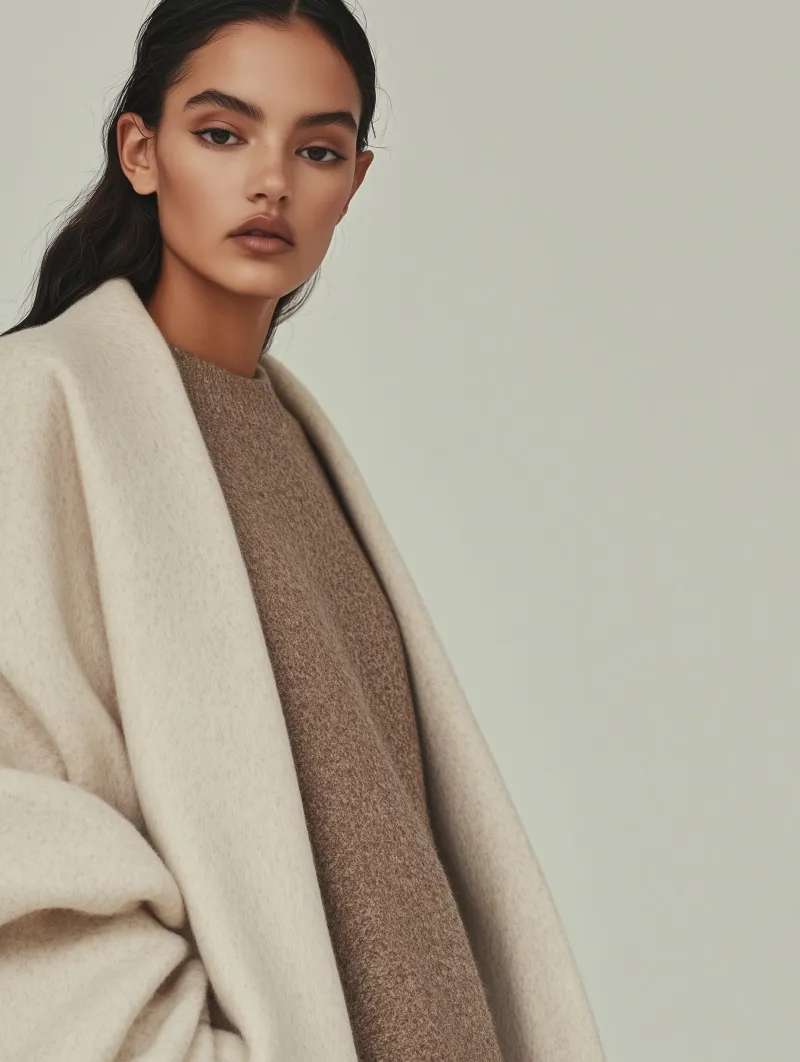
Dressed for No One: The Quiet Revolution of Wearing What You Actually Love
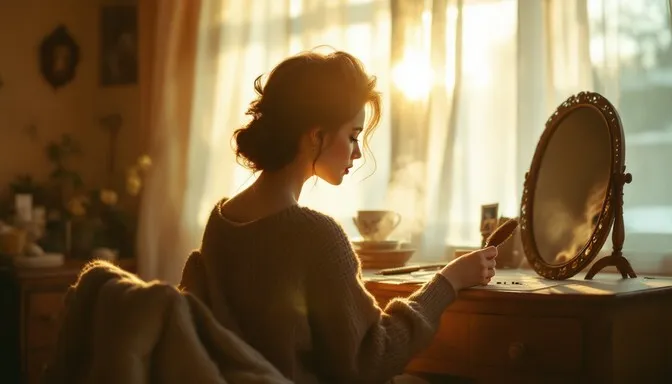
Photo: elegant woman alone morning light getting dressed private moment minimal, via images.stockcake.com
Somewhere between the flat lay and the outfit-of-the-day post, getting dressed became a public act. Not merely an expression of identity, but a performance — choreographed, captioned, and submitted for evaluation by an audience that never asked to be invited into your closet and yet, somehow, took up permanent residence there.
This is the subtle and largely unexamined consequence of a decade spent on platforms that reward visibility. The question "What do I want to wear today?" has been slowly, imperceptibly replaced by a different question: "What will this look like to others?" For many women, that shift happened so gradually that they did not notice it until they found themselves standing in front of a mirror, dressed for a room they had not yet entered, performing for an audience that existed only on a screen.
The Performance We Did Not Audition For
Social media did not invent the desire for external approval — that impulse is as old as human society. What it did was make the feedback loop instantaneous, quantifiable, and relentless. A like is a tiny but measurable affirmation. An absence of likes is a small, quiet rejection. Over time, the accumulation of these micro-signals reshapes behavior with a subtlety that is difficult to detect and even more difficult to resist.
Fashion has always had a social dimension. We have always dressed, in part, in relation to the world around us — to signal belonging, to communicate status, to participate in the visual language of our communities. This is not inherently shallow. It is human. The problem is not that clothing communicates. The problem is when the communication becomes the entire point, and the woman wearing the clothes becomes secondary to the image she is producing.
Marielle, a 38-year-old marketing director based in Chicago, describes the moment she recognized this in herself. "I was getting ready for a dinner with close friends — people I've known for fifteen years — and I spent forty minutes trying on different outfits. Not because I was unsure what I wanted to wear. Because I was trying to figure out what would look best in photos if someone took one." She pauses. "No one took photos that night. And I wore something I didn't particularly love for an evening with the people I love most. That struck me as genuinely sad."
The Approval Economy and Its Hidden Costs
The approval economy extracts a toll that is rarely tallied. It is paid in the garments purchased because they photograph well rather than feel well. It is paid in the outfits abandoned because they are too quiet, too personal, too difficult to explain in a caption. It is paid in the slow erosion of a woman's understanding of her own taste — because taste, like any faculty, atrophies without use.
When we consistently dress for the room rather than for ourselves, we outsource our aesthetic judgment to an imagined collective. We begin to dress not from the inside out, but from the outside in — starting with perception and working backward to the self. The result is a wardrobe full of pieces chosen by committee, and a woman who, when the audience is absent, is not entirely sure what she would choose on her own.
This is not a small loss. Personal style — genuine, idiosyncratic, deeply considered personal style — is one of the few daily practices through which a woman can assert her own specificity. It is a form of self-knowledge made visible. When that practice is captured by the performance imperative, something quietly essential is surrendered.
The Shift Toward Private Dressing
There is a countermovement underway, and it is happening without fanfare — which is, perhaps, the point.
A growing number of women are making the deliberate choice to dress for their own satisfaction first and exclusively. Not as a rejection of beauty or elegance, but as a reclamation of the private pleasure that clothing can offer when it is freed from the obligation to perform.
Diana, a 52-year-old architect in Brooklyn, began what she calls her "audience-free experiment" two years ago. She stopped photographing her outfits entirely. She stopped consulting her friends' feeds before getting dressed in the morning. She started, instead, with a single question: "Does this feel like me?" The results surprised her. "I started wearing things I'd owned for years but kept passing over because they felt too understated. A cashmere turtleneck in a shade of gray that's nearly invisible in a photo but is the most beautiful thing I own. I wear it constantly now. It makes me feel like the best version of myself, and no one on the internet has ever seen it."
This is not about secrecy or withdrawal. It is about recalibrating the primary relationship — the one between a woman and her own reflection, before any other audience enters the frame.
What Dressing for Yourself Actually Requires
Dressing for yourself, genuinely and without performance, demands a kind of courage that is easy to underestimate. It requires tolerating the possibility that no one will notice what you are wearing, or that they will notice and find it unremarkable. It requires making peace with the fact that your most authentic choices may not be your most photographable ones.
It also requires knowing yourself — which is, perhaps, the most demanding prerequisite of all. External validation offers a convenient substitute for self-knowledge. When you remove it, you must do the more difficult work of understanding your own preferences without the scaffolding of approval. What colors do you actually love when no trend is informing you? What silhouettes feel like yours when no algorithm is shaping your feed? What does "dressed" feel like when it is for no one but you?
The answers, when you find them, tend to be quieter than expected. Less dramatic. More enduring. They look less like a carefully composed image and more like a woman who knows exactly who she is — which is, in the end, the most sophisticated thing anyone can wear.