The Personal Uniform: How Wearing Less Unlocks More of Who You Are

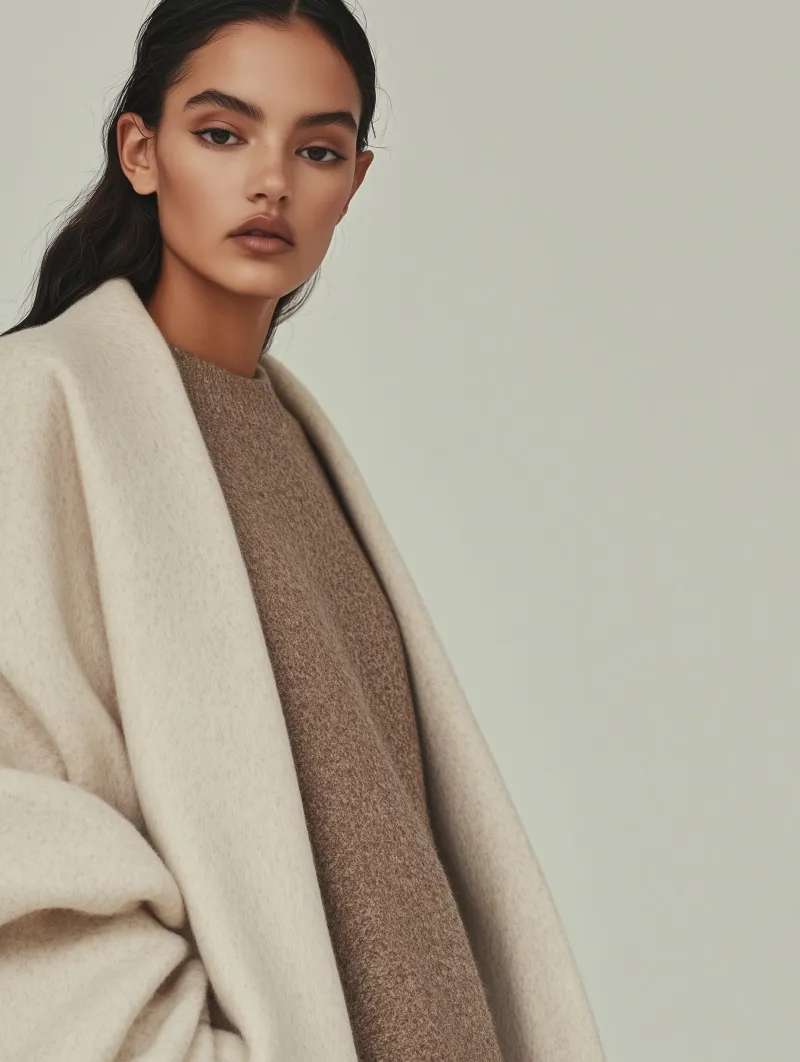
Photo by Photo by Branislav Rodman on Unsplash on Unsplash
There is a particular kind of woman who seems to inhabit her clothes rather than simply wear them. Her look is neither trendy nor stale—it exists in its own quiet register, recognizable and assured. She is not, as one might assume, the product of an unlimited budget or a personal stylist on retainer. More often, she is the product of a decision made long ago: to stop accumulating and start refining.
This is the promise of the personal uniform—not a capsule wardrobe in the conventional sense, but something more intimate and more enduring. It is a philosophy of dress that begins with self-knowledge and ends with the kind of effortless sophistication that no shopping cart can deliver.
Beyond the Capsule: A Distinction Worth Making
The capsule wardrobe concept, popularized in the 1970s by London boutique owner Susie Faux and later amplified by Donna Karan's iconic Seven Easy Pieces collection, introduced the idea that a small, coordinated wardrobe could serve as the foundation of elegant dressing. The principle was sound, and it remains so. But over time, the capsule wardrobe became a category unto itself—a checklist of approved items rather than a reflection of individual identity.
The personal uniform moves the conversation forward. Where a capsule wardrobe asks, What should I own?, the personal uniform asks, Who am I, and how does that translate into what I wear? It is less about the number of pieces and more about the coherence of vision. The result is a wardrobe that feels less like a collection and more like a signature.
Think of the creative directors, editors, and architects who have famously adopted a near-identical outfit each day. Their reasoning is rarely about minimalism for its own sake. It is about protecting cognitive bandwidth—reserving their sharpest thinking for the work that matters most.
Identifying Your Non-Negotiables
The first step toward a personal uniform is honest self-inventory, and it is more demanding than it sounds. It requires setting aside what you believe you should wear—the blazer you bought for authority, the dress you kept for occasions that never materialized—and examining instead what you consistently reach for, what makes you feel most like yourself.
Begin by observing patterns in your existing wardrobe. Which pieces do you wear on repeat, even when other options are available? Which silhouettes photograph well in your memory—not on a model, but on your own body, in your own life? What fabrics feel like a second skin versus a performance?
Your non-negotiables are not necessarily the most expensive pieces you own. They are the ones that require the least negotiation with yourself. A perfectly cut straight-leg trouser in ivory. A fluid silk blouse in a shade that flatters your complexion without effort. A structured coat that works from the farmers' market on a Saturday to a client dinner on a Tuesday. These are the anchors around which a personal uniform is built.
The Quiet Mathematics of Decision Fatigue
Research consistently demonstrates that the quality of our decisions degrades over the course of a day—a phenomenon psychologists refer to as decision fatigue. When applied to the ritual of getting dressed, the implications are significant. A closet full of options is not a luxury; it is, in many cases, a liability.
Women who have embraced the personal uniform frequently describe the same revelation: the elimination of morning deliberation does not produce monotony. It produces clarity. When you know what you are going to wear—not because you have surrendered creativity, but because you have already done the creative work—you arrive at your day with a composure that accumulates. You are not depleted before you have begun.
This is not about wearing the same outfit every day in any literal sense. It is about establishing a visual language so consistent that getting dressed becomes intuitive rather than laborious. Navy and cream with a single gold accent. Relaxed tailoring in neutral tones. Monochromatic dressing anchored by texture. Whatever the vocabulary, it becomes yours—and fluency, in any language, is its own kind of elegance.
Building the Aesthetic: Iteration Over Impulse
A personal uniform is not assembled in a single afternoon of determined shopping. It emerges through iteration—a gradual process of acquisition and elimination that rewards patience over impulse.
Begin by resisting the instinct to replace what you remove. When a piece leaves your wardrobe, observe what you reach for in its absence. That gap, and how you instinctively fill it, tells you something true about your aesthetic. Over time, these observations become a blueprint.
When you do invest, prioritize quality of construction over novelty of design. A well-made piece in a classic cut will serve your uniform for years. A trend-driven purchase, however appealing in the moment, introduces noise into a system that depends on signal.
Consider also the role of fit. No element of a personal uniform is more important. A garment that fits with precision communicates intentionality in a way that no label or price point can approximate. If alteration is required—and it frequently is, particularly for women who do not conform to standard sizing—it is an investment that pays continuous dividends.
The Confidence That Follows
There is a quality of assurance that women who dress with this kind of intention tend to share. It is not the confidence of someone who has spent lavishly or followed every directive from the season's runway. It is the confidence of someone who knows herself—who has done the introspective work and arrived at a coherent answer.
This is, perhaps, the most compelling argument for the personal uniform: it is not merely a wardrobe strategy. It is a practice of self-definition. In a culture that profits from our uncertainty about who we are and what we need, choosing to dress from a place of clarity is quietly radical.
The most elegant women in any room are not those who wear the most. They are those who wear with the most intention. And intention, unlike inventory, is something that can always be refined.