Dressed Down, Standing Out: How Wearing Less Gives You More Room to Be Seen
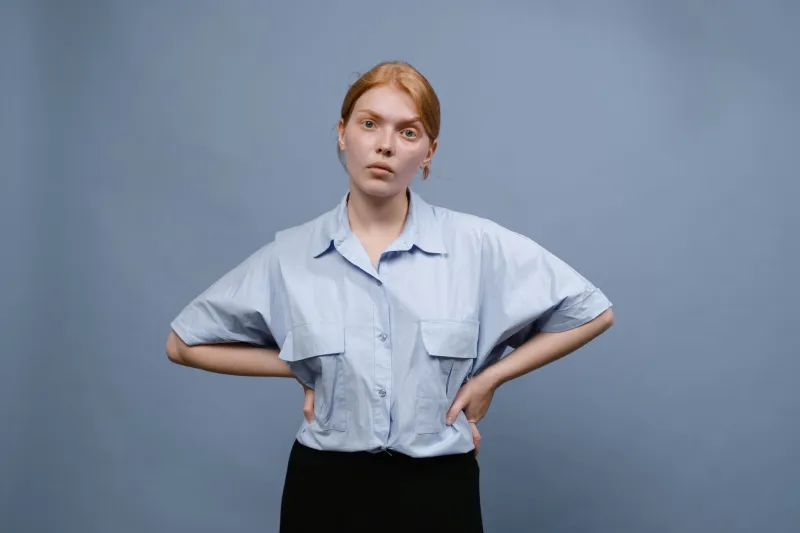
There is a moment that many women describe in almost identical terms. They have cleared out the excess — the statement pieces that never quite felt like statements they wanted to make, the trend-driven purchases that demanded attention before the wearer could offer any of her own. And standing before a simplified wardrobe, they expect to feel diminished. Instead, they feel, for the first time in years, entirely themselves.
This is not coincidence. It is psychology.
The Noise That Clothes Can Make
Before we can understand what minimalist dressing adds, it helps to reckon honestly with what sartorial excess costs. Clothing that is visually busy, tonally inconsistent, or trend-reactive does something specific in social environments: it redirects attention toward itself and away from the person wearing it. A room full of people will process a bold graphic, an unexpected silhouette, or a conspicuous logo before they process the individual beneath it. The garment becomes the message. The woman becomes the frame.
Behavioral researchers have long understood that cognitive load shapes first impressions. When an observer is given too much visual information simultaneously, the brain prioritizes pattern recognition over nuanced human perception. In practical terms, this means that a highly embellished or trend-saturated outfit can actually obscure the very qualities — intelligence, warmth, authority, originality — that a woman most wants to project. She is dressed loudly, yet paradoxically harder to hear.
Minimalism interrupts this dynamic entirely.
When the Clothes Step Back, the Person Steps Forward
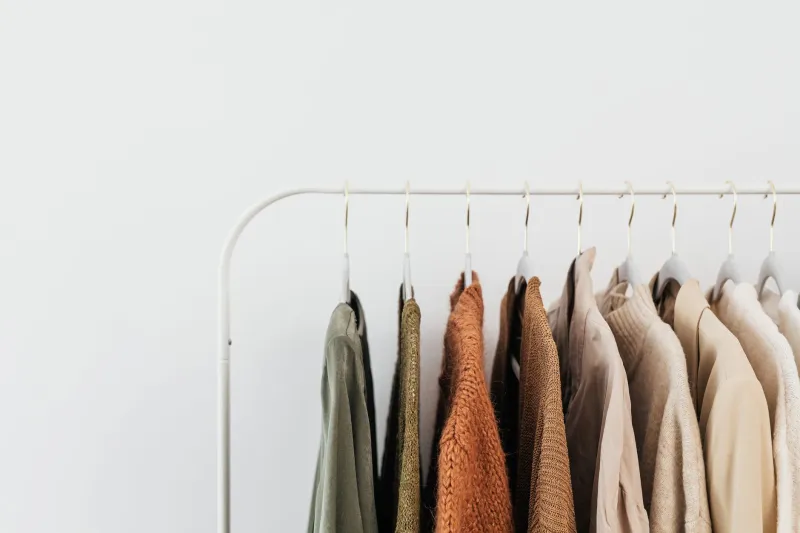
A well-chosen neutral palette, a silhouette that fits with precision, a fabric that moves with quiet confidence — these elements do not disappear in a room. They recede, which is an entirely different thing. Recession in this context means that the eye, finding no sartorial drama to resolve, moves almost immediately to the face, the posture, the expression. The woman becomes the primary subject of perception rather than a secondary detail behind her wardrobe.
This shift has measurable social consequences. Women who have adopted a more considered, restrained approach to dressing frequently report that professional interactions feel more substantive — that colleagues and clients seem to engage more directly with their ideas rather than offering reflexive commentary on their appearance. The conversation changes because the visual invitation has changed.
This is not a small thing in American professional culture, where appearance-related commentary in workplace settings — however well-intentioned — can subtly undermine a woman's authority by centering her aesthetics rather than her competence. A wardrobe that refuses to invite that kind of commentary is, in its own quiet way, a professional strategy.
The Internal Architecture of Confidence
The external dynamics are compelling, but the internal shift may be more profound. Confidence, in its most durable form, is not a performance. It is a state of alignment — the felt sense that what you are presenting to the world corresponds accurately to who you actually are. Excess in dressing frequently works against that alignment.
When a wardrobe is assembled reactively — in response to trends, to social pressure, to the ambient anxiety that something in your closet is not quite right — the act of getting dressed becomes a daily negotiation rather than a daily affirmation. Women who have moved through this experience describe a low-grade but persistent cognitive drain: the mental energy spent deciding what to wear, managing the dissonance between how they look and how they feel, navigating the subtle exhaustion of presenting a version of themselves that requires maintenance.
Stripping that away does not leave a vacuum. It leaves clarity. And clarity, it turns out, is one of the more underrated foundations of genuine confidence.
Psychologists who study self-concept and identity consistency note that people who experience strong alignment between their internal self-image and their external presentation tend to demonstrate greater ease in social interactions, more decisive communication, and a lower susceptibility to social anxiety in unfamiliar environments. Minimalist dressing, at its best, is a practice of closing that gap.
The Uniform as Liberation
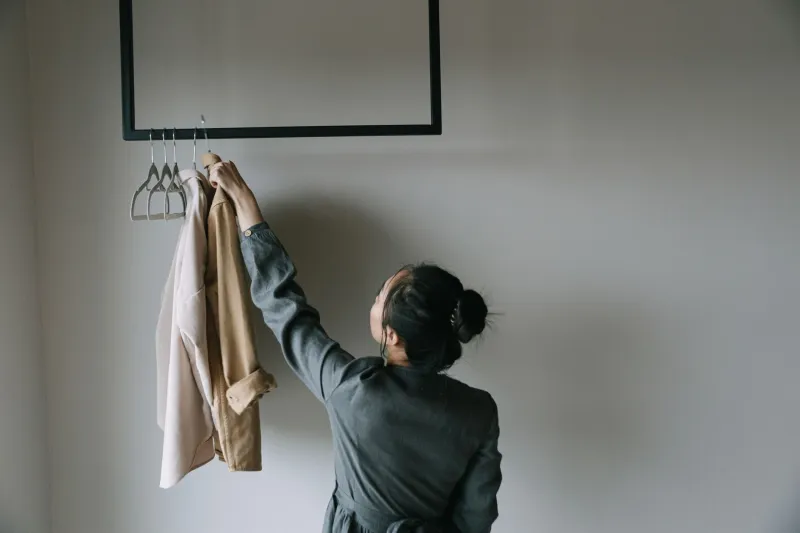
The idea of a personal uniform — a consistent, refined approach to dressing that removes daily decision-making from the equation — has gained considerable traction among high-achieving women across industries. What is often framed as a productivity strategy is, at its core, something more intimate: a declaration of settled identity.
When you know what you wear, you know, in some essential way, who you are. The wardrobe stops being a question you answer every morning and becomes a statement you make once, then live inside. The freedom this generates is not merely logistical. It is existential. Mental bandwidth previously consumed by sartorial uncertainty becomes available for presence — for genuine attention to the people, conversations, and moments that constitute an actual life.
This is what the most compelling women in minimally dressed rooms tend to emanate: not the confidence of someone who has solved the puzzle of style, but the ease of someone who has stopped treating it as a puzzle at all.
Practical Reorientation
For women considering this shift, the entry point is rarely a dramatic wardrobe purge. It is, more often, a quieter recalibration — a willingness to ask different questions when standing before the closet.
Not: Is this interesting? But: Does this feel like me?
Not: Is this on trend? But: Would I reach for this without thinking?
Not: Does this make a statement? But: Does this allow me to make mine?
The answers to those questions, pursued honestly over time, tend to produce a wardrobe that is smaller, more coherent, and infinitely more wearable. They also tend to produce something less tangible but equally real: a woman who enters rooms with her attention directed outward rather than inward, whose presence registers because she is not competing with her own clothing for it.
The Deepest Form of Dressing Well
At Sheer Inspirations, we have always held that true elegance is not about accumulation. It is about discernment — the practiced ability to distinguish between what adorns and what obscures, between what expresses and what performs.
The confidence paradox, once you have lived it, is no paradox at all. It is simply the experience of getting out of your own way. Of letting the sheer fact of your presence — your voice, your gaze, your particular way of occupying space — do the work that no garment ever truly could.
The women who understand this are not dressed minimally because they have run out of ideas. They are dressed minimally because they have arrived at the best one.